Nº 001 — Sanskulla
CAT-2024-001Sanskrit + skull. Apparently this needed a name.
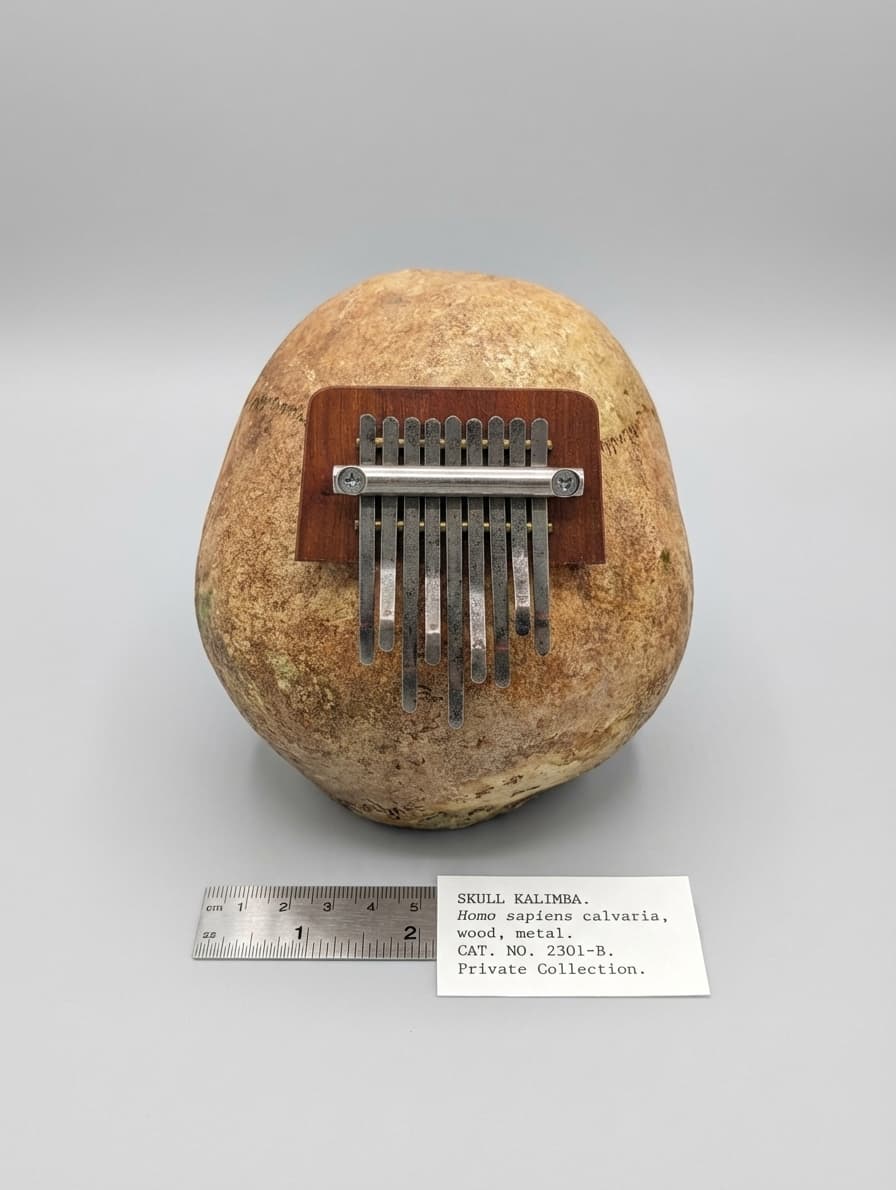
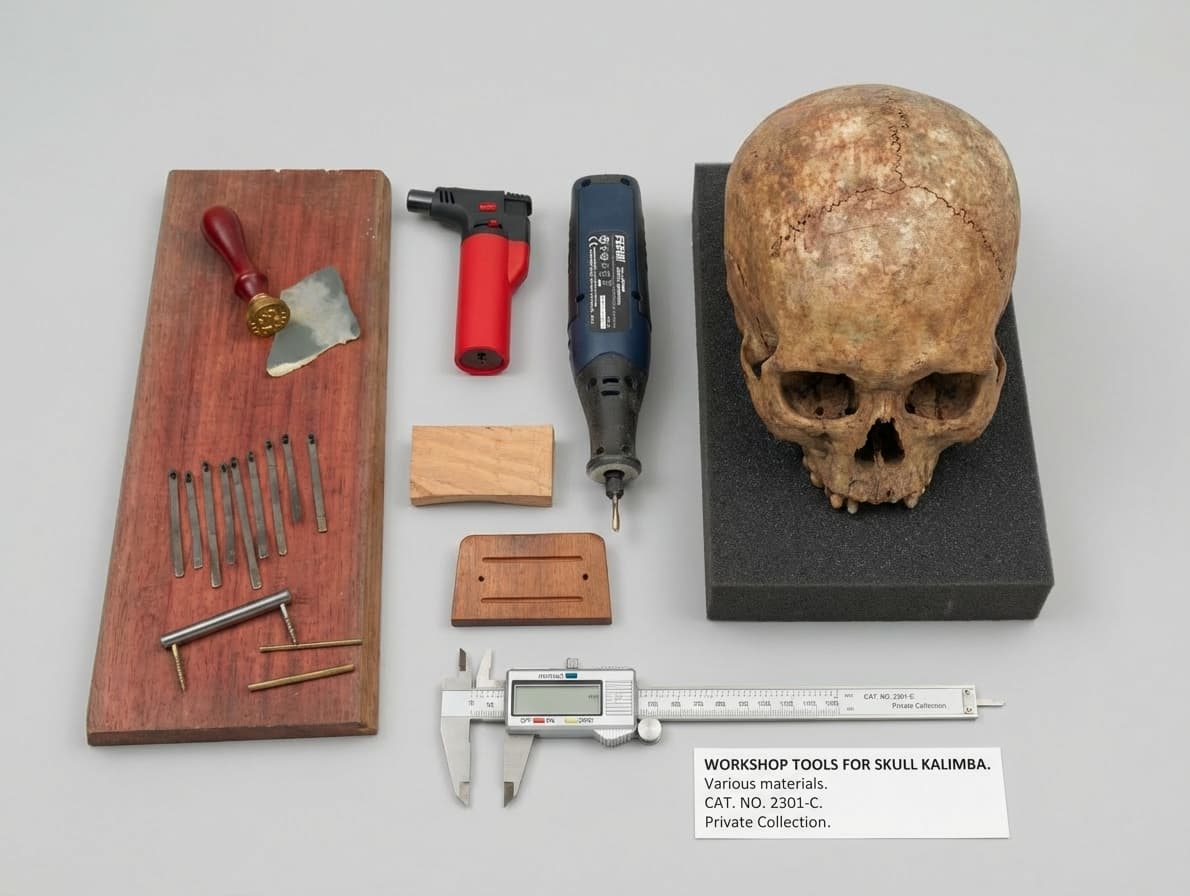
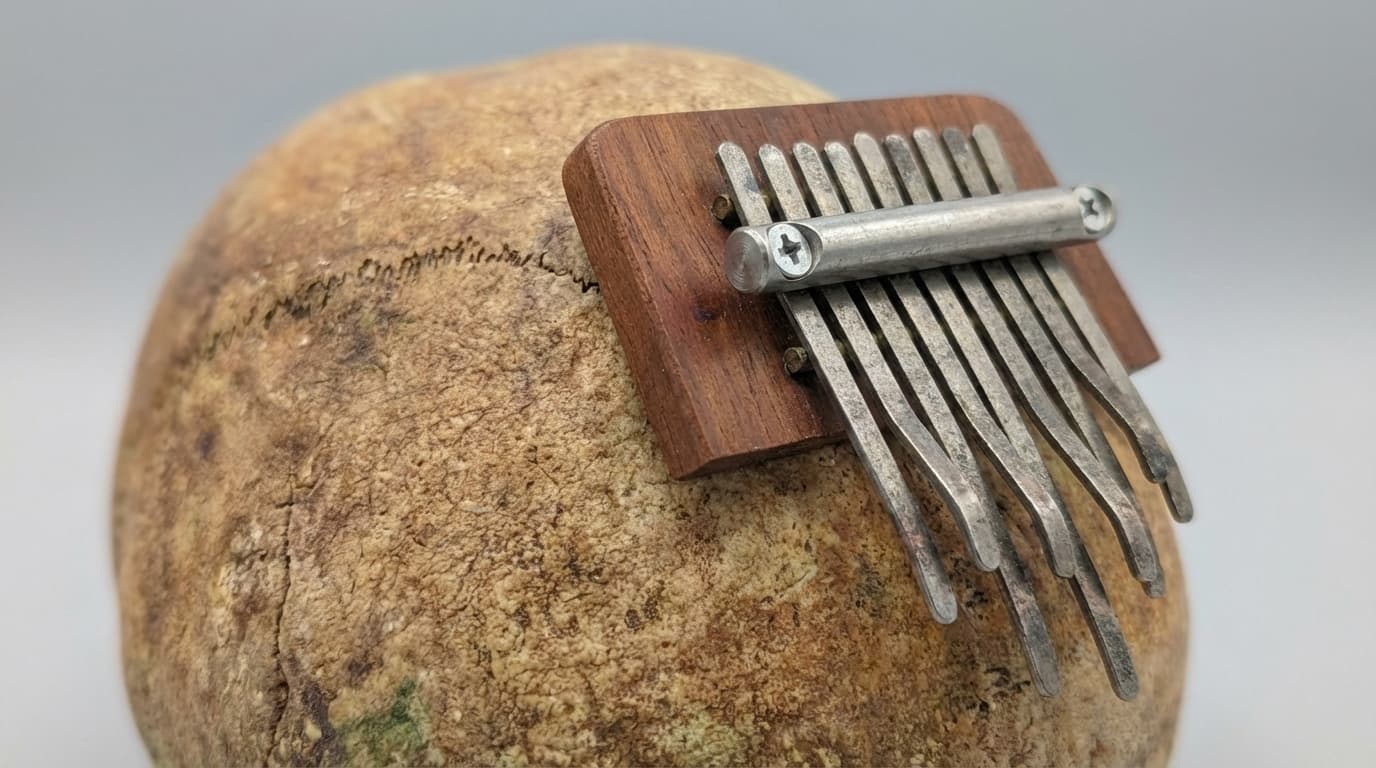
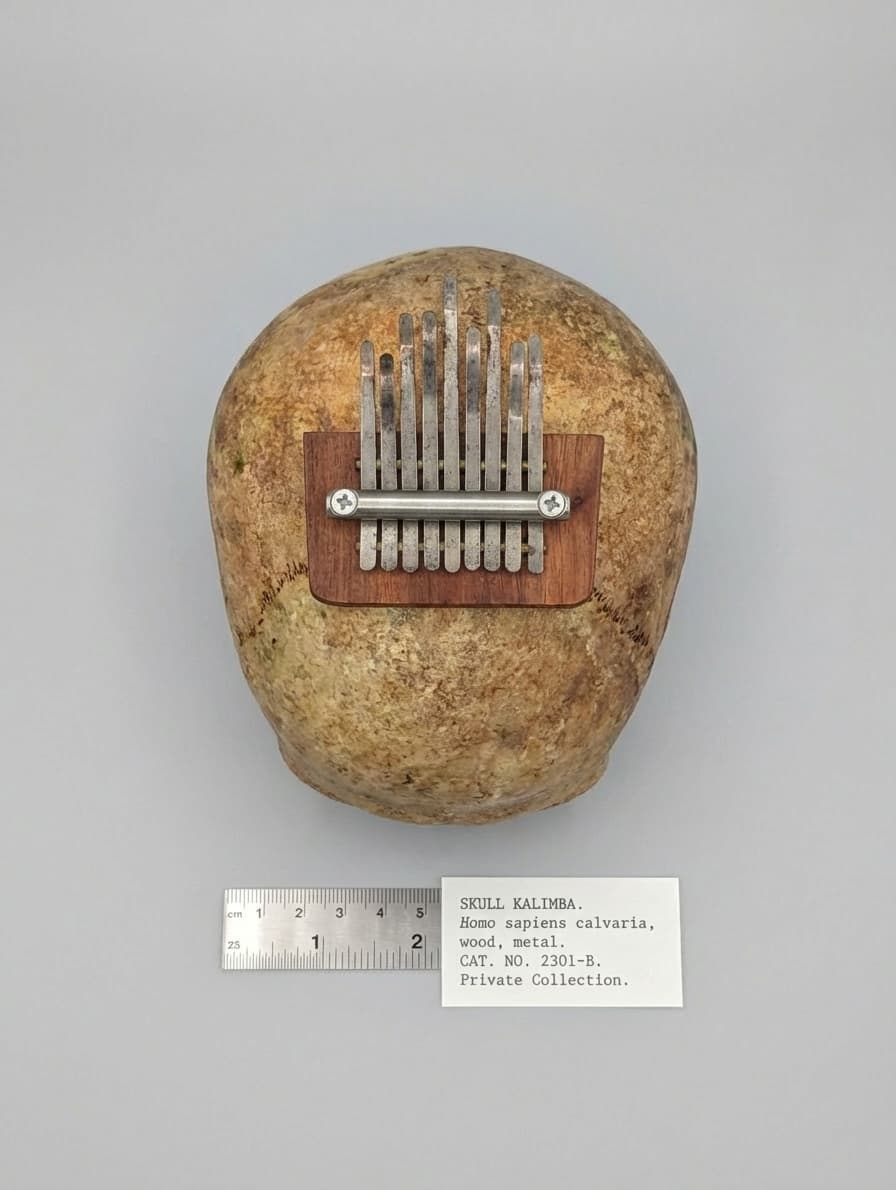
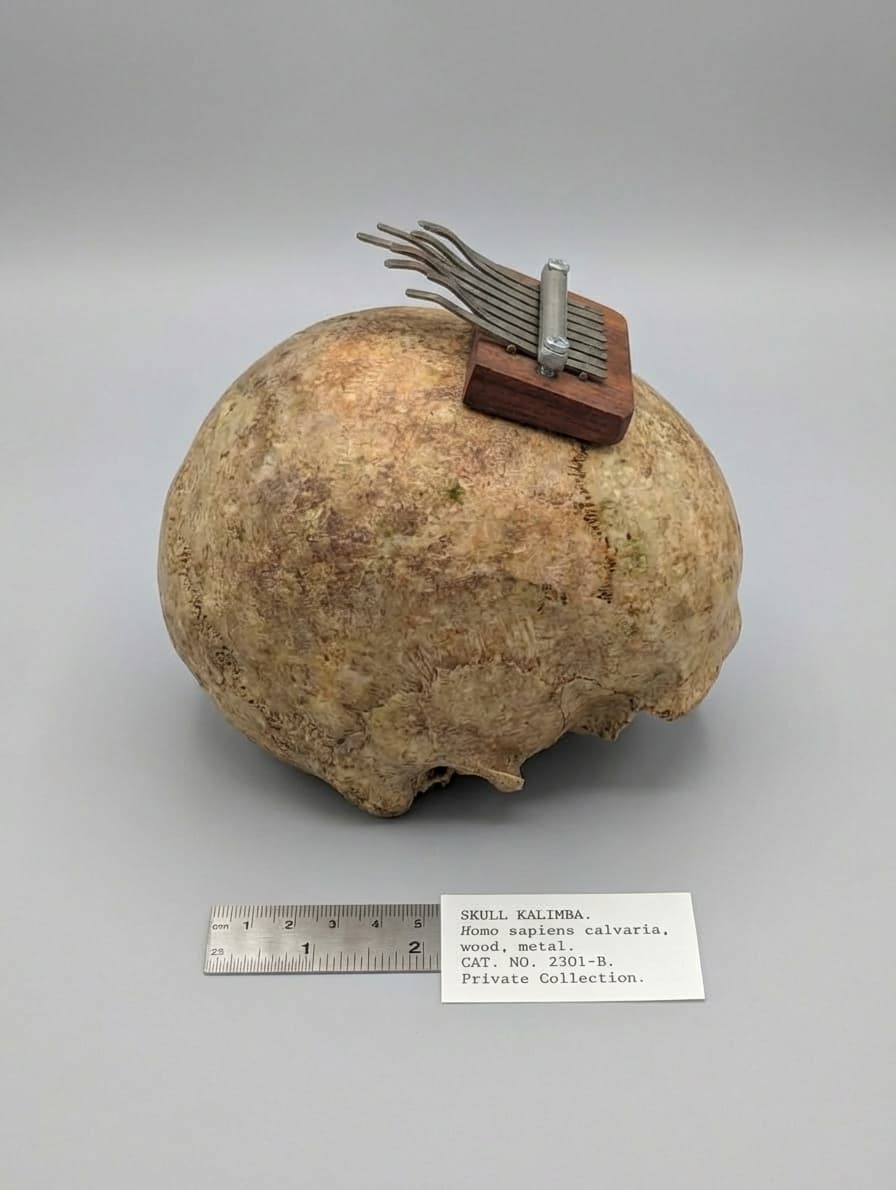
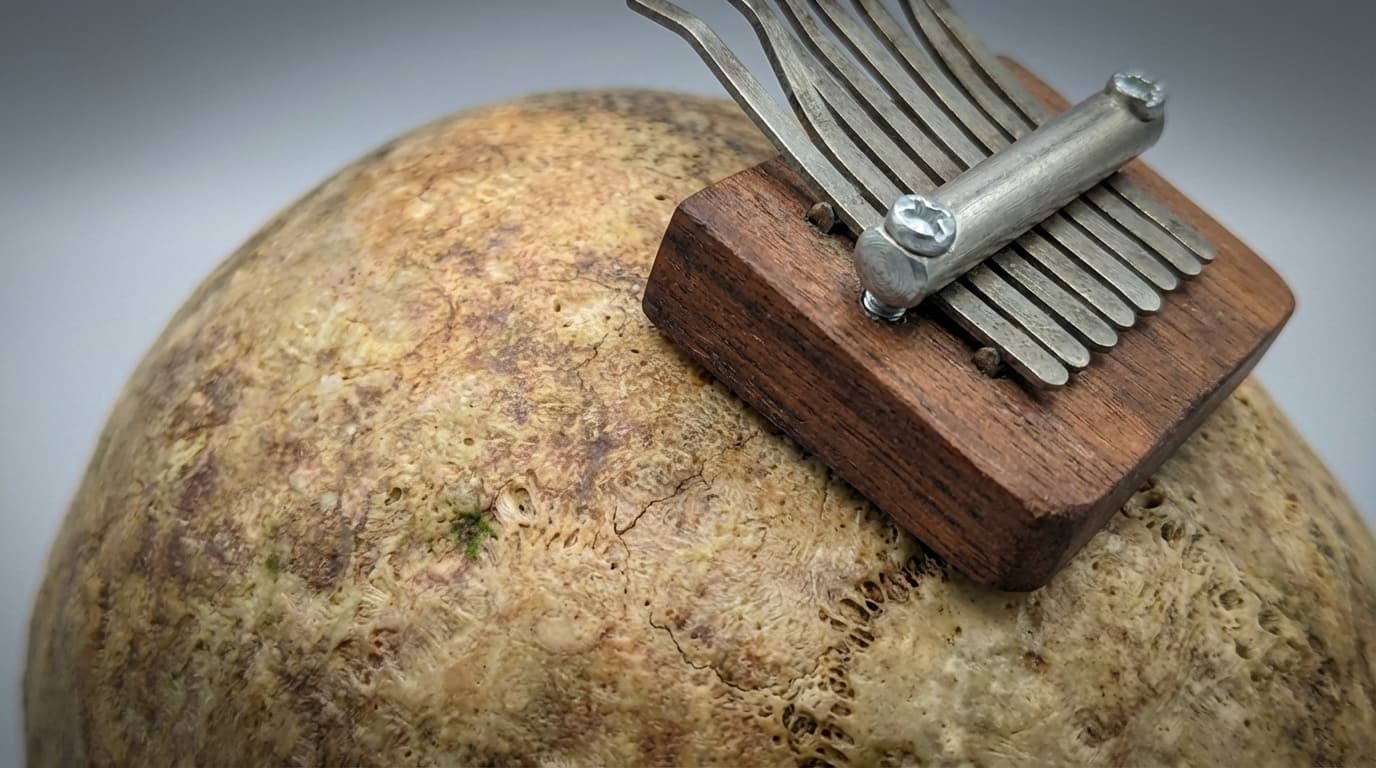
Frontal view. Calvaria with cherry wood corpus and spring steel tine assembly mounted
Classification
A sansula — a kalimba variant using a resonance body — built on an autopsy-cut human skull top, formally known as a calvaria. Most people call it a human soup bowl. Both descriptions are technically accurate.
Construction
The corpus is solid American cherry wood, CNC-milled from a 3D scan of the skull's surface topography. This produces an exact-fit cradle that channels vibrations from the tines into the bone. Felt and a polymer adhesive sit between the two layers to cancel rough vibrations.
No bone was cut, drilled, or modified. The skull remains fully intact. The 3D scanning and CNC process exists specifically to avoid that.
Material: tines
Spring steel. High-carbon, chosen for its yield strength — it returns to its original form after being displaced. Nine tines tuned to A minor (a' – c'' – c' – a' – a – f' – e' – e'' – b'), with additional tines at B and F. All notes harmonize.
Whether you believe that is your concern.
Resonance behavior
The calvaria acts as a resonance dish, amplifying the tine vibrations and converting the full assembly into a vibrating instrument. When tilted during play, sound waves are interrupted and decelerated, producing a cyclical modulation — a wah effect, in practical terms.
Nothing creates more resonance than playing with your own head.
Nº 002 — Early works (age 14)
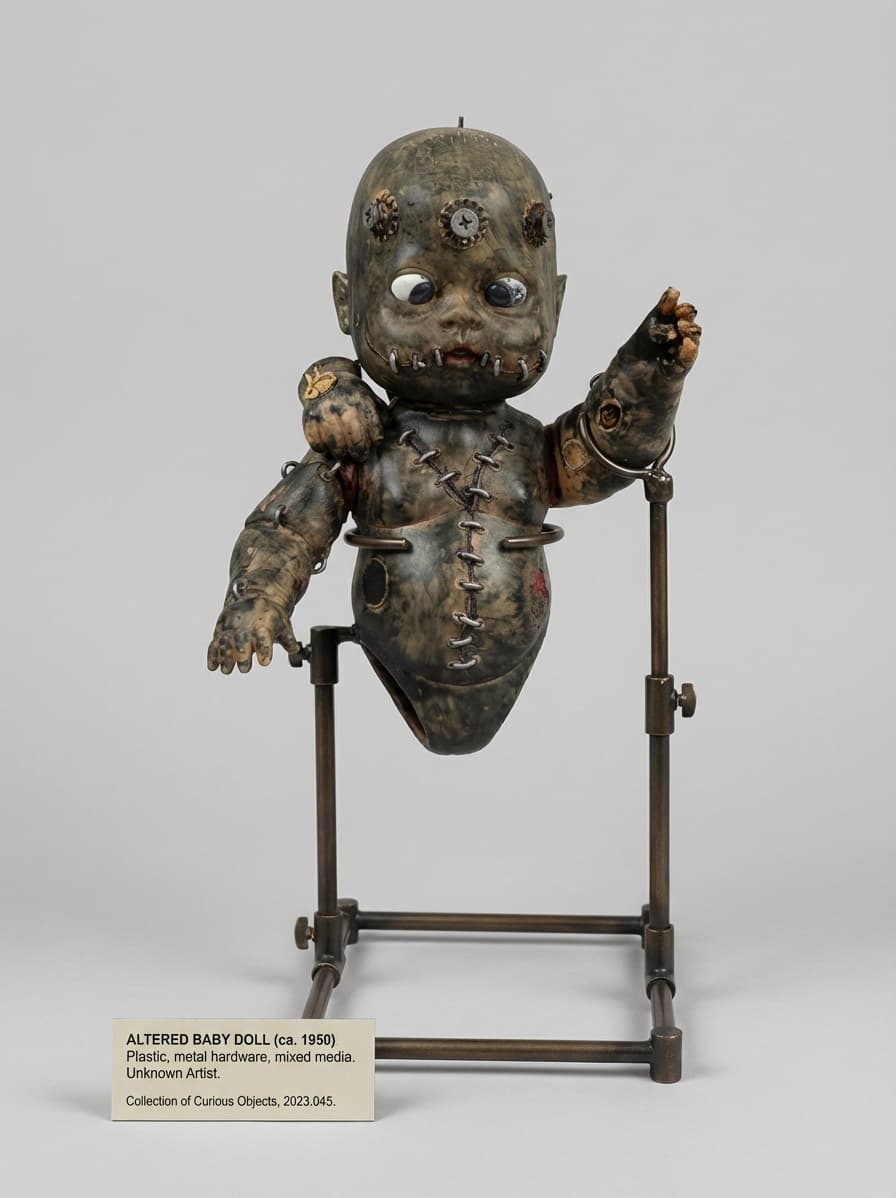
Recovered from a box labeled "childhood stuff." Originally catalogued as creativity. Reclassified on review as something else entirely.
Nº 004 — 428
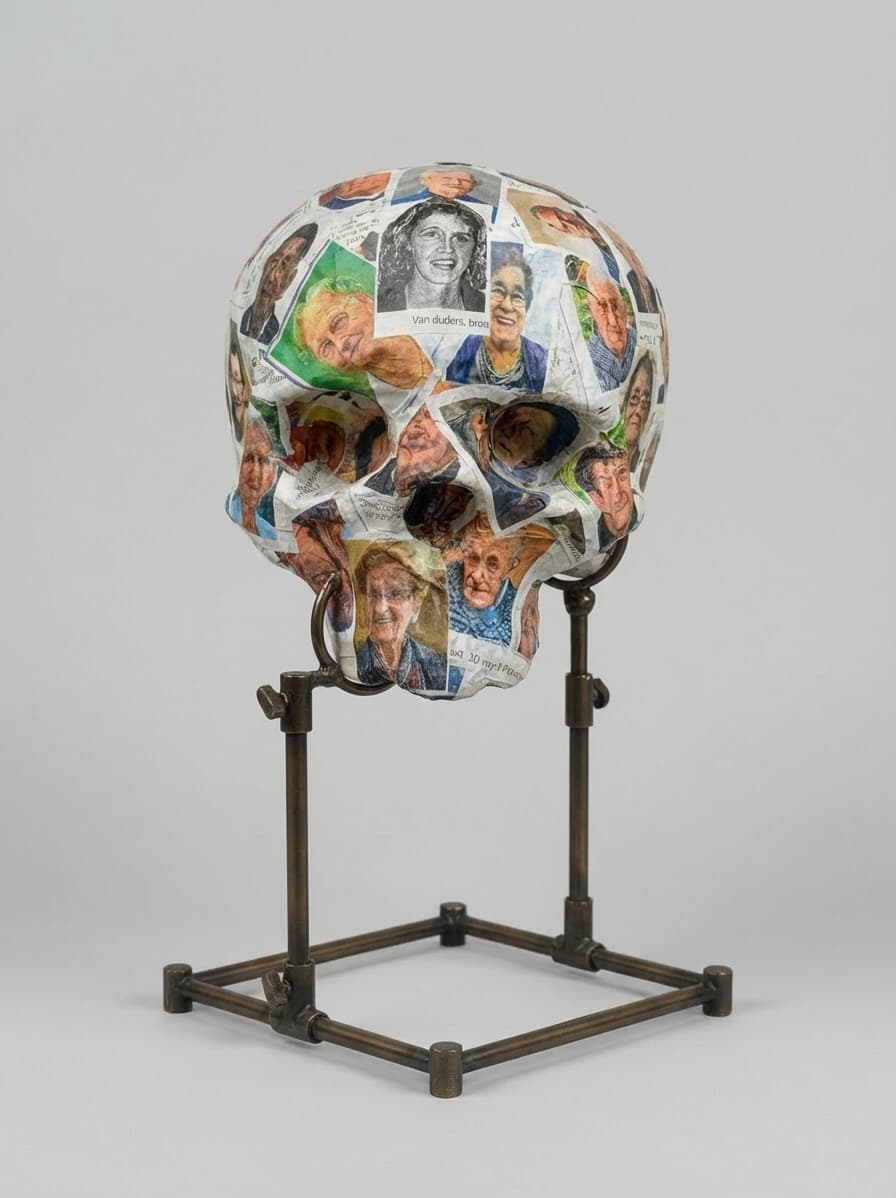
A skull constructed from 428 newspaper obituary clippings, modeled from an actual human skull in the collection. Each contributor has successfully quit smoking and drinking.
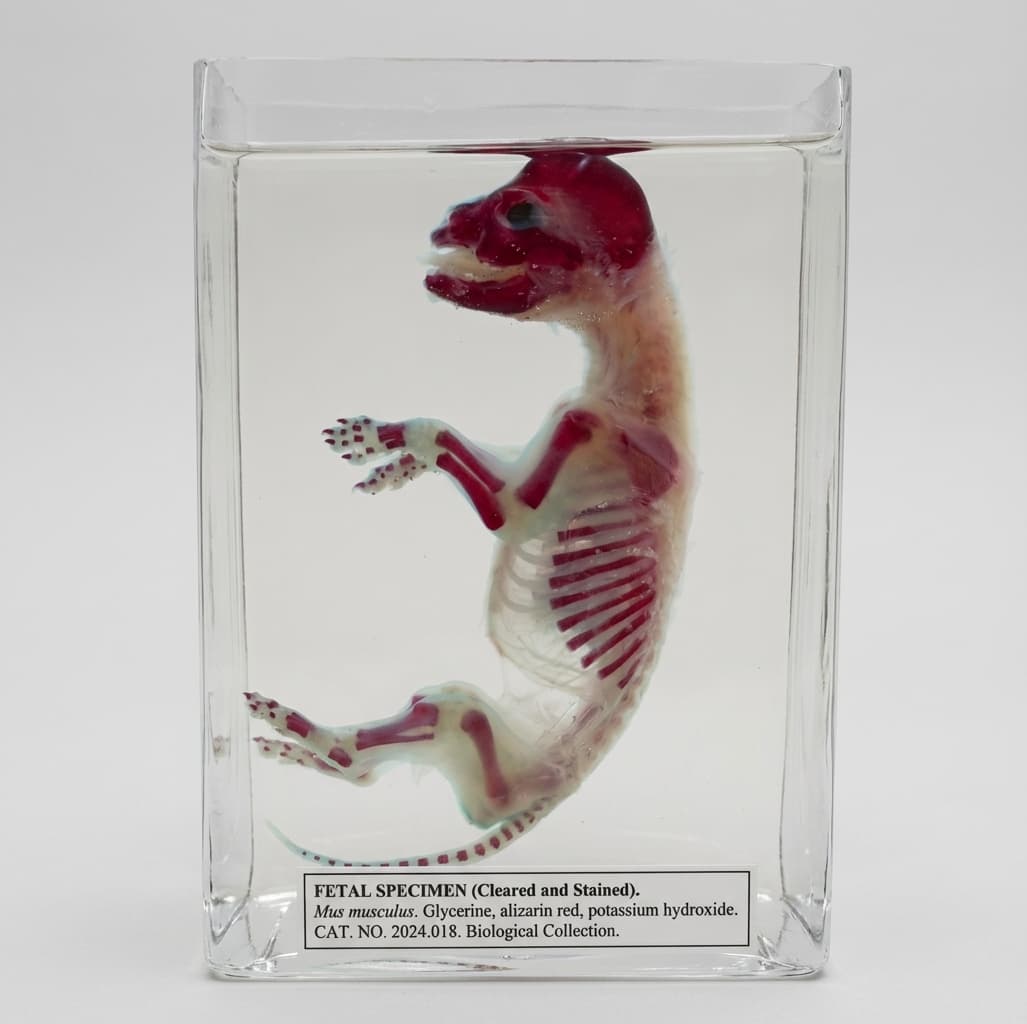
Nº 005 — Good boy
Cleared and stained juvenile canine specimen. The anterior fontanelle remains unfused, producing a visible star pattern on the cranial vault where the dye does not reach. Responds well to commands.