Nº 006 — Zap me twice
CAT-2301-DZap me once, I'm dead. Zap me twice — you can't.
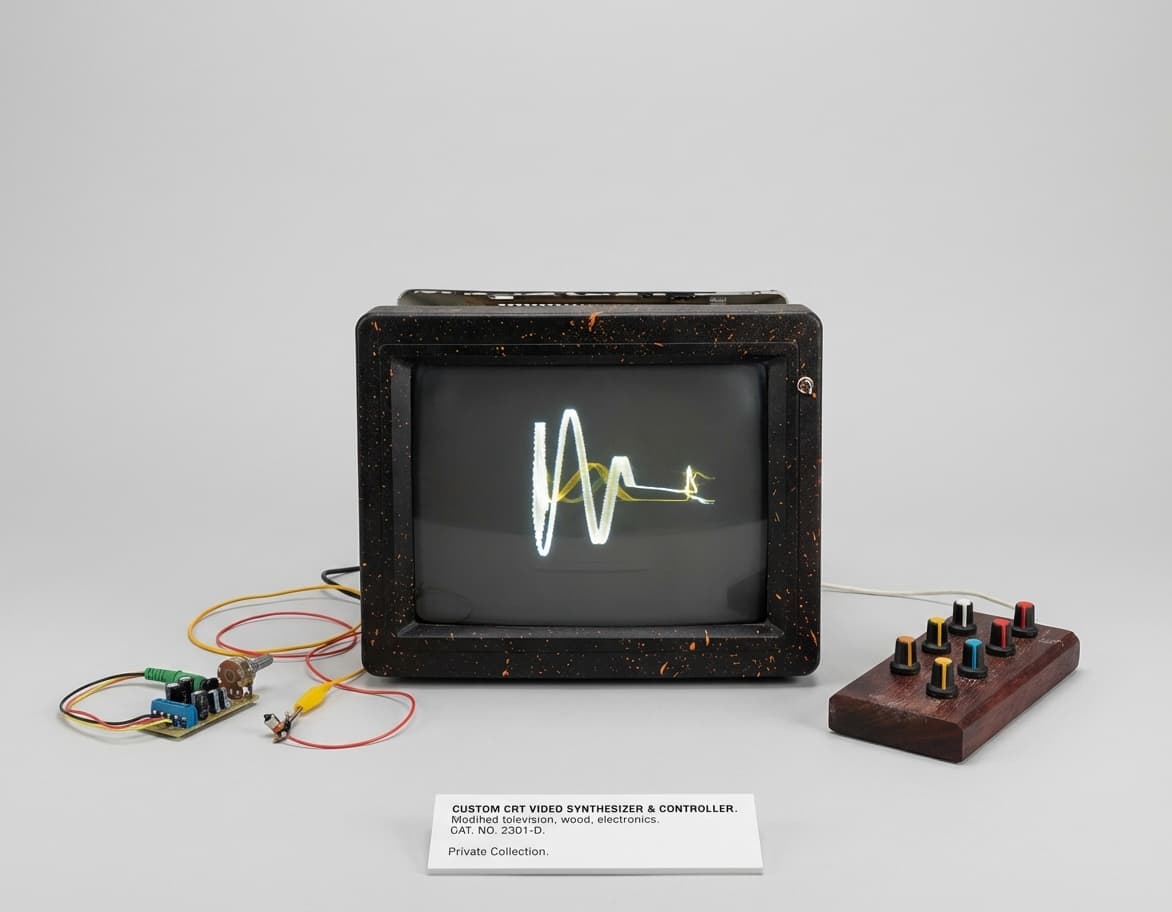
Acquisition
The television was recovered from a municipal waste facility. Brand unknown. Date of manufacture unknown. Previous owner unknown. Cause of death: presumed neglect. It was a black-and-white CRT unit — the kind that people stopped wanting around the time flat screens arrived and suddenly everyone needed their furniture to look thinner.
It sat in a pile with other things that had stopped being useful. It was brought home. This was either an act of rescue or hoarding. The distinction remains unclear.
Resurrection
The television's original tuner and signal processing circuitry were bypassed entirely. A custom circuit board was built from scratch — voltage regulators, signal amplifiers, and a potentiometer for fine adjustment — wired directly into the CRT's deflection yoke. Audio signal is routed to the horizontal and vertical deflection coils, which means the electron beam inside the tube is now being steered by sound rather than broadcast television.
The result: Lissajous figures. Sound becomes geometry. A sine wave draws an ellipse. Two frequencies in harmony draw a stable knot. Dissonance produces chaos. The phosphor screen renders it all in the green-white glow of a technology that was considered obsolete before this device decided otherwise.
Controller
The wooden control unit houses seven potentiometer knobs — frequency, amplitude, phase offset, gain, and several parameters that are best described as "see what happens." The knobs are color-coded. The color-coding is aesthetic rather than informational. The wood is solid, possibly reclaimed. It has the weight of something that was built to be held, not displayed.
Operating principle
A cathode ray tube fires electrons at a phosphor-coated screen. Normally, a scanning circuit sweeps the beam in orderly rows to form an image. In this device, that orderly sweep has been replaced with raw audio waveform. The beam goes where the sound tells it to go. Feed it a clean tone and it draws clean geometry. Feed it a human voice and it draws something that looks like a human voice should — tangled, unstable, and occasionally beautiful.
Safety
CRT televisions contain a flyback transformer that charges the tube to approximately 15,000 to 25,000 volts. This voltage can remain stored in the tube for weeks after the device is unplugged. Working inside one without discharging the anode is, in medical terms, a poor decision.
The device was zapped once during construction. The device was completed anyway. It has not attempted this again.
Some things work better after they've been thrown away.